How Long Should Your Tankless Water Heater Last? The Habits That Add 10 Years
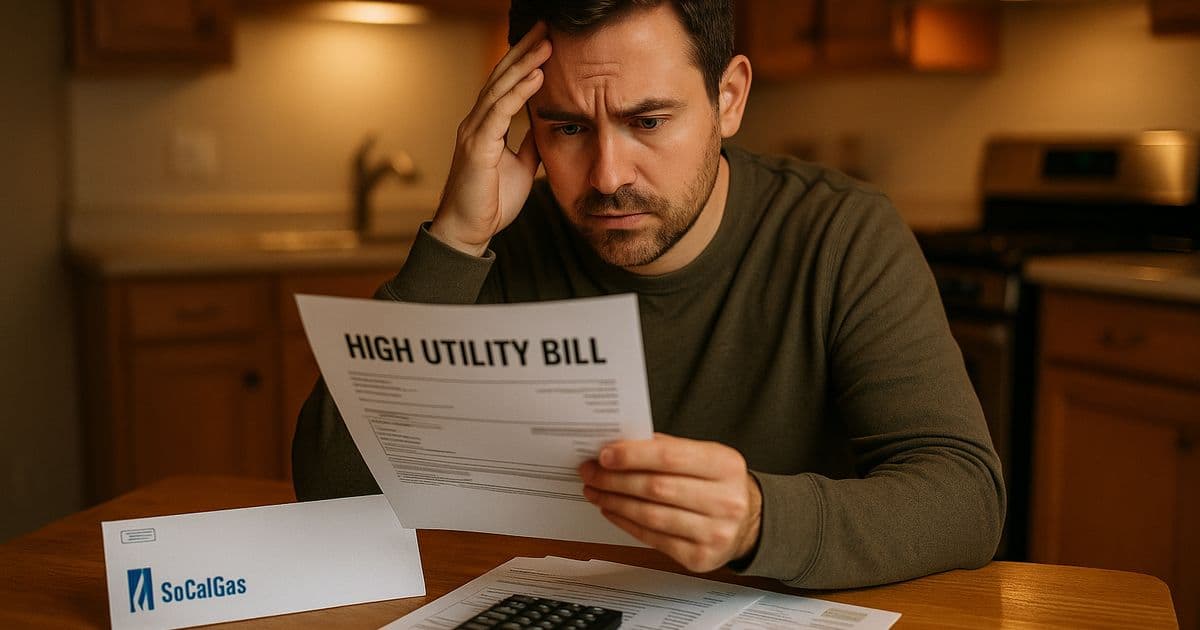
When you spent $2,500-$4,500 on a tankless water heater, the sales pitch included a number: 20 years. Maybe even 25. The implication was clear — this is the last water heater you'll buy for a long time.
That number isn't wrong. A well-maintained tankless water heater genuinely can last 20 years or more. But the key phrase is "well-maintained." Without regular maintenance, especially in a hard water area like Orange County, that 20-year lifespan compresses to 8-12 years. The difference between those two outcomes comes down to a handful of simple habits that most homeowners either don't know about or don't prioritize.
Here's what determines whether your tankless water heater reaches its full lifespan, what kills these units prematurely, and a framework for knowing when to repair versus replace.
15-20 Years With Maintenance vs. 8-12 Without
These aren't arbitrary ranges. They're based on the mechanical realities of how tankless water heaters age.
The Maintained Unit: 15-20 Years
A tankless water heater that receives professional flushing every 6-12 months keeps its heat exchanger free of scale. Without scale, the heat exchanger operates within its designed temperature range, avoiding the thermal stress that causes metal fatigue, micro-cracks, and eventual failure. Other components — flow sensors, flame rods, gas valves, and control boards — also last longer when the unit isn't constantly overheating and cycling through safety shutdowns.
Manufacturers like Rinnai, Navien, and Noritz design their units for a 15-20 year service life under the assumption that maintenance recommendations are followed. The heat exchanger warranties on premium models (10-15 years) reflect confidence in the component's durability when scale is managed — but most require documented annual flushing to keep coverage valid.
The Neglected Unit: 8-12 Years
A unit that never gets flushed — or gets flushed once every few years instead of annually — follows a different trajectory. Scale accumulates on the heat exchanger year after year, creating an insulating layer that forces the unit to work harder. The heat exchanger runs chronically hot. Thermal cycling stresses the metal. Micro-cracks develop. Seals degrade faster from excessive heat exposure.
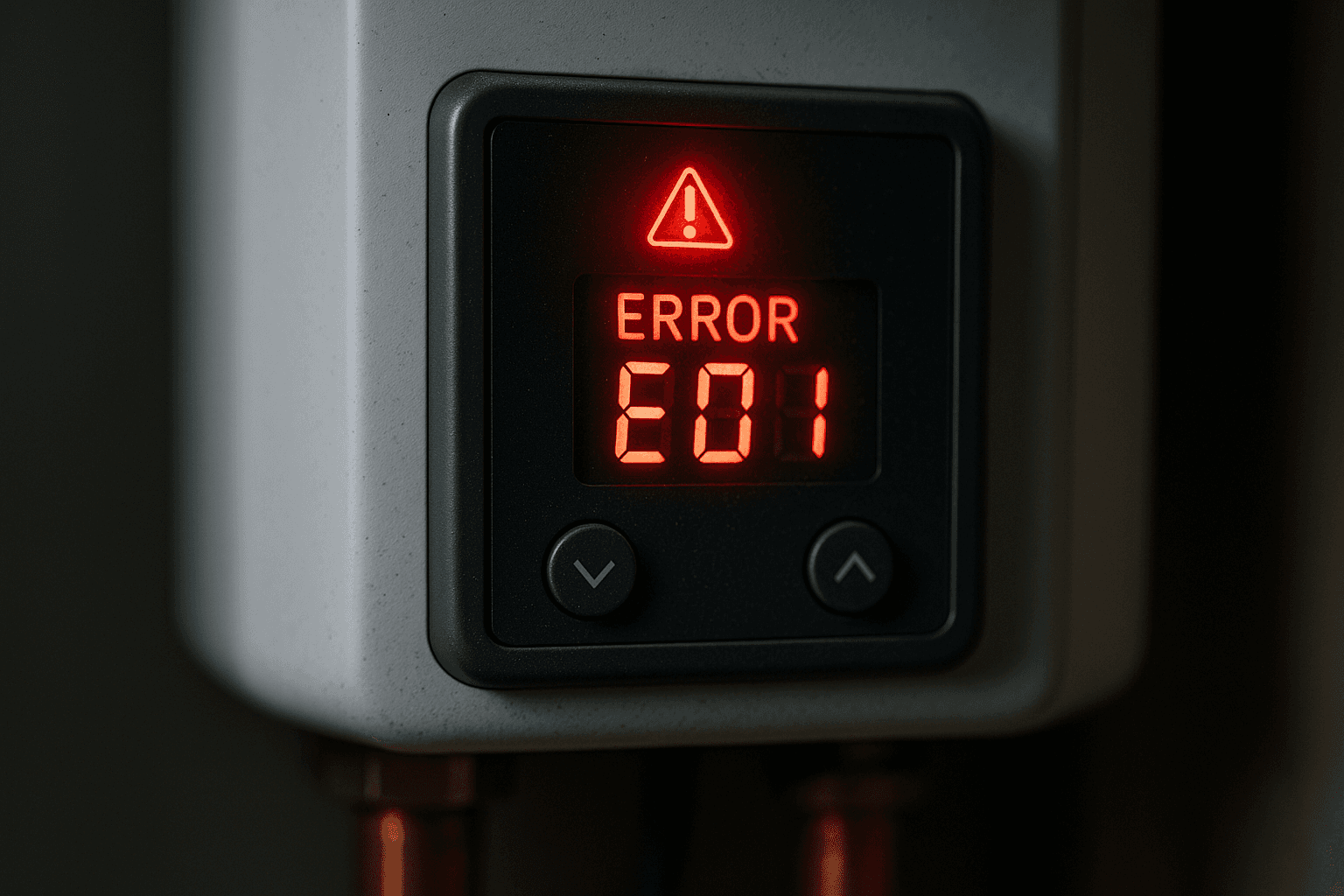
By year 6-8 in Orange County's hard water, a neglected unit typically shows significant performance degradation: frequent error codes, temperature fluctuations, reduced flow, and elevated gas bills. By year 10-12, the heat exchanger may crack or develop pinhole leaks, and repair costs approach or exceed the value of the unit.
The gap between these two outcomes — 8 years versus 20 years — represents roughly $4,000-$9,000 in avoided replacement costs, plus the accumulated efficiency savings over the additional operating years.
What Kills Tankless Water Heaters Early
Understanding the specific failure modes helps explain why maintenance matters so much.
Scale Accumulation (The Primary Killer)
Scale is responsible for the majority of premature tankless water heater failures. The mechanism is straightforward: calcium carbonate deposits insulate the heat exchanger, causing it to overheat. Chronic overheating leads to thermal fatigue in the metal, which leads to cracks and leaks. Once the heat exchanger cracks, the unit is either facing an $800-$1,500 repair or a full replacement.
In Orange County, where water hardness runs 250-400 ppm, scale accumulates aggressively. A unit in Irvine or Anaheim accumulates more scale in 6 months than a unit in Seattle accumulates in 3 years. This is why national maintenance guidelines — which often suggest flushing every 1-2 years — are inadequate for Orange County homeowners.
Chronic Overheating and Short-Cycling
When scale triggers repeated safety shutdowns, the unit goes through rapid heating-and-cooling cycles that stress every component. Thermal expansion and contraction fatigues solder joints, gaskets, and heat exchanger walls. Ignition components wear faster from repeated startups. The control board processes more error conditions.
A unit that short-cycles ten times a day ages far faster than one that runs smoothly through each heating demand.
Acidic Water or Improper Descaling
While rare in Orange County's municipal water supply, acidic water (low pH) can corrode copper heat exchangers from the inside. More commonly, we see damage from homeowners who attempt DIY flushing with inappropriate chemicals — muriatic acid, for example, which is far too aggressive for the thin-walled tubing in a heat exchanger. Professional descaling solutions are formulated to dissolve calcium without attacking the metal itself.
Poor Installation
Undersized gas lines, improper venting, missing isolation valves, and incorrect electrical connections all shorten the lifespan of a tankless water heater. These issues compound over time, forcing the unit to operate outside its designed parameters.
The Maintenance ROI Math
Let's quantify the return on investment for regular tankless water heater maintenance.
Cost of Maintenance Over 20 Years
Assuming flushing every 9 months in Orange County (the recommended interval for homes without a water softener):
- Number of flushes over 20 years: approximately 26
- Cost per flush: $399
- Total maintenance investment: 26 flushes at $399 each
Cost of NOT Maintaining Over the Same Period
Without maintenance, you're looking at one or more of these scenarios:
- Premature replacement at year 10: $3,000-$4,500 for a new unit installed, plus the original investment that didn't reach its full lifespan
- Major repairs between years 6-10: Heat exchanger replacement ($800-$1,500), flow sensor replacement ($200-$400), control board replacement ($300-$600)
- Higher gas bills: $108-$228/year in excess gas consumption from scale-related efficiency loss, totaling $1,080-$2,280 over 10 years
- A second replacement at year 20: Another $3,000-$4,500 because the first replacement didn't last either
The Bottom Line
Regular maintenance costs a fraction of a single premature replacement. See our flush cost breakdown for Orange County to understand exactly what you'll spend. And maintained units don't just last longer — they run more efficiently every day they operate, saving on gas bills continuously. The U.S. Department of Energy confirms that properly maintained tankless units can be 24-34% more energy efficient than conventional storage tank heaters.
Age Milestones: What to Expect at 5, 10, and 15 Years
Not all maintenance needs are the same throughout the unit's life. Here's what to anticipate at each major milestone.
Year 5: The First Checkpoint
If you've been flushing regularly, your unit should be operating near its original performance specs at year 5. This is a good time for a comprehensive inspection beyond the standard flush — check venting integrity, gas pressure, electrical connections, and all seals and gaskets. Any installation issues that were marginal at year 1 may have become problems by year 5.
If you haven't been flushing regularly, year 5 in Orange County hard water is where you'll start seeing the first symptoms: temperature fluctuations, occasional error codes, and slightly higher gas bills. Scale has been accumulating for 5 years, and it's now thick enough to affect performance. A professional flush at this point can still fully recover the unit in most cases, but the scale may require a longer descaling cycle to dissolve completely.
Year 10: Decision Point
For maintained units, year 10 is still well within the normal operating life. Components are aging but functional. The heat exchanger, if kept clean, has plenty of life remaining. You may need to replace a flame rod, flow sensor, or other minor component — these are $50-$400 repairs that are well worth making on a healthy 10-year-old unit. If you're unsure which brand handles long-term durability best, our Rinnai vs. Navien vs. Noritz comparison breaks down the differences.
For neglected units, year 10 is often the end of the road. Heat exchangers that have endured a decade of unchecked scale accumulation in hard water are frequently cracked or severely corroded. At this point, you're facing the repair-versus-replace decision described below.
Year 15: The Home Stretch
A maintained 15-year-old tankless water heater is entering the final phase of its designed lifespan. It still works, but components are approaching their wear limits. This is the age where we recommend planning for replacement within the next 3-5 years, even if the unit is currently running well. Start researching current models and budgeting for the transition.
For units that have been maintained but not perfectly — flushed every 18 months instead of every 9, for example — year 15 is where deferred maintenance catches up. You may see the first heat exchanger issues, and the repair-vs-replace math starts tilting toward replacement.
The Repair vs. Replace Framework
When your tankless water heater needs a significant repair, use this decision framework.
Repair When:
- The unit is under 10 years old AND has been regularly maintained. A single component failure in a maintained unit is routine, and the rest of the unit has years of life remaining.
- The repair cost is less than 40% of replacement cost. If a new unit installed costs $3,500 and the repair is $800 or less, repair makes financial sense.
- The heat exchanger is not the failed component. Flow sensors, flame rods, ignition modules, and even gas valves are all replaceable at reasonable cost. The heat exchanger is the unit's most expensive and most critical component — if everything else is healthy, repairing peripheral components extends the unit's life significantly.
Replace When:
- The heat exchanger has cracked or is leaking. While heat exchanger replacement is possible ($800-$1,500), on a unit that's 10+ years old with poor maintenance history, the remaining components are likely approaching failure. Replacing one expensive part in a unit where everything else is worn is often a poor investment.
- The unit is 15+ years old and needs a major repair. At this age, even on a well-maintained unit, replacing the unit gives you a new warranty, improved efficiency (newer models are more efficient than models from 15 years ago), and another 15-20 years of service.
- Multiple components have failed or are failing. If you need a heat exchanger and a control board and a gas valve, the combined repair cost will approach or exceed a new unit, and you'll have a 12-year-old unit with a mix of old and new parts.
- The unit was never properly maintained. A neglected unit that fails at year 8-10 has likely sustained damage throughout. Repairing the immediate failure doesn't address the accumulated wear on every other component.
Start the Clock in Your Favor
Whether your tankless water heater is brand new or ten years old, the single most impactful thing you can do for its longevity is maintain a consistent flushing schedule. Every flush resets the scale buildup, protects the heat exchanger, and keeps the unit operating within its designed parameters.
If your unit has never been flushed — or it's been more than a year — you're losing lifespan every month you wait. The scale that's building up right now is the scale that will shorten your unit's life by years.
Tankless Flush Pro provides flat-rate $399 flushing throughout Orange County, with commercial-grade descaling, full system inspection, and warranty-compliant documentation. It's the most cost-effective investment you can make in the appliance that cost you thousands.
Schedule your flush today and start adding years back to your tankless water heater's lifespan.